
Length and rhythm
How Long Should a Journal Entry Be? And How Often to Write

The short answer
A journal entry should be as long as one true line, and for a record of your days, that’s a full entry. Add a word for how it felt if you like. Write it at a time you already stop, like plugging in your phone. Keep it that small for a week, and go longer only when you want to.
In 30 seconds
- One line is a complete journal entry.
- Pick the length by why you journal, not by a page count.
- Daily is easier to remember. Weekly suits planning.
- A missed day doesn’t cancel the days you wrote.
You wrote three pages on Monday. You had the good pen, a free evening and so much to say that your hand ached a little by the bottom of page three.
Then Tuesday asked for three more. The notebook has been closed ever since.
The length was the problem. You weren’t.

Reading XP0 XP
How long a journal entry should be
Long enough to say one true thing about the day. For a personal journal, that’s a sentence or two, holding any of these:
- What happened: “Bus was late. Read on the platform.”
- How it felt: “So-so.”
- One detail you’d forget: “The driver waved at a dog.”
The notebook on your nightstand has no teacher. It only has you, on a tired evening, deciding whether to open it at all. So size the entry for that evening.
Long entries aren’t wrong. They just make a bad daily target, because the bar you set on a good Monday is the bar you’ll face on a bad Thursday.
Write the length you could repeat on your worst day.
Length and frequency by why you journal
The right length depends on what the journal is for. A record of your days needs far less room than a page where you think through a decision.
| Why you journal | Length that fits | How often | Example |
|---|---|---|---|
| Remember your days | One line | Daily | “Rain, then pancakes.” |
| Build a habit | One line after the step | On step days | “Read 2 pages. Hard to stop.” |
| Think something through | 5 to 10 minutes | When you need it | “Two options. Wrote both out. Leaning B.” |
| Plan the week | A short list | Weekly | “Call the landlord. Gym twice. Finish the scarf.” |
| A class journal | What the teacher sets | As set | “Week 3: the reading changed my mind.” |
The top row is the one most people can keep. One line, daily, with nothing to prepare.
The middle row is long for a reason. Thinking something through takes room, so give it room on the days you need it.
And let the other days stay short. If you’d like a question waiting for that short line each night,  try it in Yumemira.
Mixing rows is fine too. One line daily, plus a page when something big turns up.
How often should I journal?
Daily or weekly both work. What matters is which one you’ll remember.
Daily is easier to keep, because it hangs on something you do every day anyway. Brush your teeth, write the line.
Weekly gives each entry more to work with, since a whole week of meetings, meals, phone calls and small surprises is waiting for you by the time Sunday comes round.
But a weekly slot is easy to lose. One missed Sunday can turn into three.
- Pick daily if you want a record of most days and can spare a minute.
- Pick weekly if you mostly plan or look back.
- Pick “when needed” for working through a decision, and keep a daily line beside it.
But the slot matters less than the cue. The best time to journal is the one tied to something that already happens. And if daily is your plan, how to journal every day helps with busy weeks.
How long should I journal for each day?
About a minute for one line, or five to ten minutes when you’re thinking something through. That’s it.
Some nights the pen keeps going, and you look up twenty minutes later with cold tea and four pages about a stapler that only jams on Fridays. Fine. Just don’t make that night the new rule.
In Yumemira, the small-steps goal journal for iPhone, one line is the whole job. After a step, tap Say how it went and write it.
We make the app, so count us as biased. A notebook does the same work.
Do I have to journal every day?
No. Daily is easier to remember, but a missed day doesn’t erase anything.
So the pages you already wrote stay written, every one of them, whether the gap after them is a day long or the length of a whole winter.
On the shortest days, go shorter. One word is allowed: “Tired.” That’s the idea behind micro journaling, where a single sentence is the whole entry.
In Yumemira, a day counts when you do your step or write a note. That’s why it works as a one-line journal.
Skip the catching up and write today’s line.
If a reminder would help, Yumemira keeps them per goal. They stay off until you turn them on.
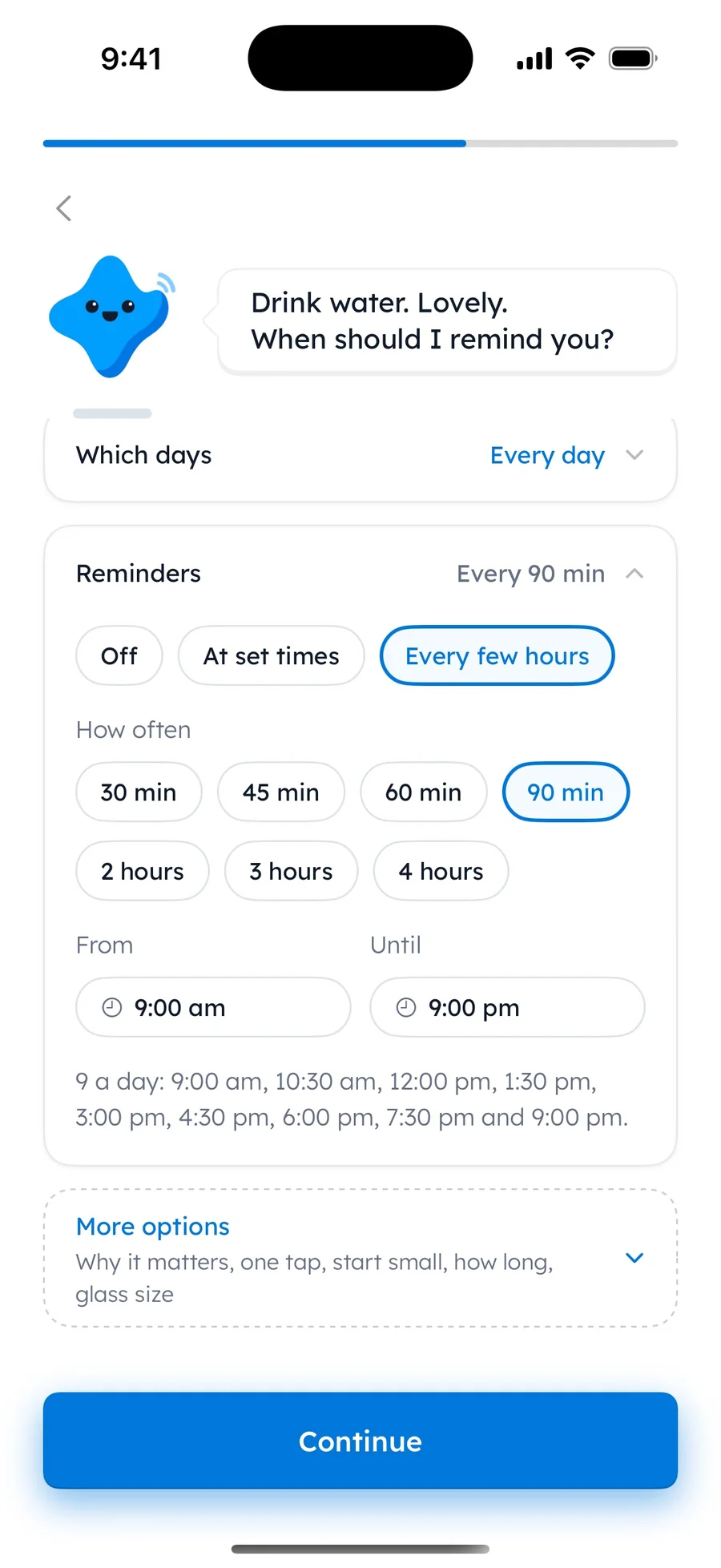
On paper, the reminder is the notebook left on your pillow.
If a class sets the length
Follow the teacher. A course journal has its own rules, and they win.
For scale, the University of Edinburgh’s reflection toolkit (opens in a new tab) says course entries often run 250 to 700 words. It also says there’s no one right length.
Everything above is about the journal you keep for yourself, the one nobody marks, which can be a single line on a night when the day was mostly laundry.
Monday’s three pages can stay in the notebook. Tonight needs one line.
Questions people ask
How long should a journal entry be?
As long as one true sentence about the day. For a personal journal, one line plus a word for how it felt is a full entry. Write more on days you want to, but keep one line as the daily floor.
How often should I journal?
Daily works well if you keep it to one line, because it hangs on a routine you already have. Weekly suits planning or longer entries. Pick the one you’ll remember, and try it for a week.
How long should I journal for each day?
About a minute for one line. Give it five to ten minutes on days you’re thinking something through. There’s no minimum time, and a timer is optional.
Should I journal daily or weekly?
Daily, one line, is easier to remember and gives you a record of most days. Weekly gives you more room per entry but is easier to forget. You can also mix both: one line daily, a longer entry on Sunday.
Do I have to journal every day?
No. A missed day changes nothing about the days you already wrote. Skip the catching up and write today’s line, whatever kind of day it was.
Sources
TopicStart journaling

You earned the Curious Reader badge
You know the length now. Tonight, write one line and stop.
0 XP

Yumemira is an iPhone app (iOS 18 or later).
More about the daily journalYumemira is free to start. iPhone, iOS 18 or later.