
Bad habits
Examples of bad habits, and one small swap for each
The short answer
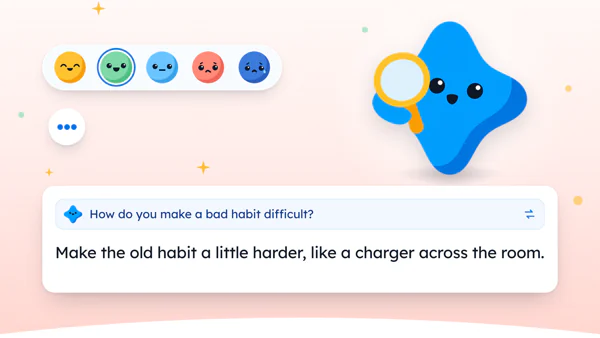
Common examples of bad habits are snoozing the alarm, doom-scrolling after dinner, the phone in bed, late-night snacking, leaving the dishes, impulse buys and checking email first. Pick one and notice the minute it starts. Then put one small swap in that exact minute, and keep the swap tiny until it feels a bit boring.
In 30 seconds
- Bad habits are small habits tied to a time or a place.
- Find the minute a habit starts before you try to change it.
- Put one small swap in that exact minute.
- Make the old habit a little harder, like a charger across the room.
“One more video,” you said at 11:15.
It’s 12:40 am now, and the phone has picked the next five videos for you without asking once.
Ten everyday bad habits are in the table below, each with the minute it usually starts and one small swap for that minute.

Reading XP0 XP
What counts as a bad habit
A bad habit is something you repeat that you’d rather not, set off by the same time or place most days.
It doesn’t make you a bad person. It makes you a person with a routine nobody chose on purpose.
But every habit runs on the same little loop. In his Atomic Habits summary (opens in a new tab), James Clear names the four parts: cue, craving, response and reward.
So the useful question is when it shows up. That minute is also most of how to stay consistent on the days motivation has gone home early.
Ten examples of bad habits, with a swap for each
Find the minute the habit starts, then change that minute.
| Habit | When it shows up | Small swap | What to write after |
|---|---|---|---|
| Snoozing the alarm | The first alarm | Get up when the alarm rings | “Up at 7:05. First alarm, for once.” |
| Doom-scrolling | After dinner | Put the phone away for 10 minutes | “Phone in the drawer. Washed the pan.” |
| Late-night snacking | Around 10 pm | Swap one sweet thing | “Tea instead of the biscuits.” |
| Leaving the dishes | After dinner | Tidy for 2 minutes | “Two minutes. Sink half empty.” |
| Impulse buys | Payday | Skip one small buy | “Left the third phone case in the cart.” |
| Email first | Opening the laptop | Focus for 10 minutes | “Ten minutes on the slides. Email after.” |
| Phone in bed | Lights out | Charger across the room | “Charger by the door. Read two pages.” |
| Skipping lunch | Busy days | Make a simple snack at home | “Packed a sandwich. Ate it sitting down.” |
| The clutter chair | Evenings | Tidy for 2 minutes | “The chair is a chair again.” |
| Late replies | The weekend | Send a short hello | “Sent a short hello to an old friend.” |
The fourth column matters more than it looks. It’s the part that shows you, two weeks from now, which nights the swap actually worked.
Phone and screen habits
Three of the ten live on the phone. They start in different minutes, so they need different swaps.
Doom-scrolling after dinner
The plate’s cleared and the couch is right there. And the thumb starts moving before you’ve decided anything.
The swap: put the phone away for 10 minutes. Another room is best, though a drawer does the job.
Ten minutes is short enough to say yes to. But it’s also long enough to start something else, like the pan in the sink that’s been waiting since you sat down.
And the pan won’t argue.
The phone in bed
This one shows up at lights out. The swap is to move the charger across the room, so reaching the phone means getting up.
Nobody scrolls for long while standing at the far wall of the bedroom, holding the cable very still at the one angle it agrees to charge.
That’s the whole trick.
Late replies
The message came on Saturday. You meant to answer it properly once you had a quiet evening, and now it’s Wednesday and the quiet evening still hasn’t come.
Why does a reply get harder the longer it waits? Because the proper answer you planned keeps growing in your head.
The swap: send a short hello. “Saw this and thought of you” will do.
Morning and evening habits
Mornings and late evenings are when you’re most tired. So habits settle there very comfortably.
Snoozing the alarm
The alarm rings, and your thumb finds the snooze button in the dark without either eye opening, the way it has every weekday morning for years.
Clever thumb.
The swap: get up when the alarm rings. You don’t need to be awake, only standing.
Late-night snacking
Around 10 pm, you’re at the fridge again, looking in as if it might have restocked itself since 8.
The swap: swap one sweet thing. Tea instead of the biscuits, or one square instead of the bar. There are no food rules here.
Since it’s our app, a plain note: nine of the ten swaps above are busy-day steps in Yumemira, the small-steps goal journal for iPhone. The charger is the odd one out.
The ready goal Less phone time has a busy-day step that reads “Put the phone away for 10 minutes”. You tap Mark done when it’s finished, then Say how it went in one line.
On paper it looks the same: a tick next to the habit, and a few words about how the swap went.
Home and money habits
These three don’t arrive all at once. They pile up one plate at a time.
Leaving the dishes
After dinner, the pan is “soaking”, and by Thursday it has soaked for three days and started to look like it pays rent there.
It isn’t leaving.
The swap: tidy for 2 minutes. Whatever’s left when the time’s up can stay.
Set a 2-minute timer and stop when it rings.
The clutter chair
Picture the chair in your bedroom that stopped being a chair a while ago. It holds clothes now, the ones too worn for the wardrobe. When did it last hold a person?
The swap is the same 2 minutes, on the chair only, folding or hanging whatever’s on top until the timer goes and not one sock more.
Some nights it gets its seat back.
Impulse buys
Payday is the usual minute, or a sale email that lands late at night. The swap: skip one small buy, and leave it in the cart until tomorrow.
Will you still want that third phone case once you’ve slept on it and checked what’s already in the drawer?
It’ll still be there.
The app’s No-spend days goal counts the days you kept, three times a week by default. Paper works the same way with a tick.
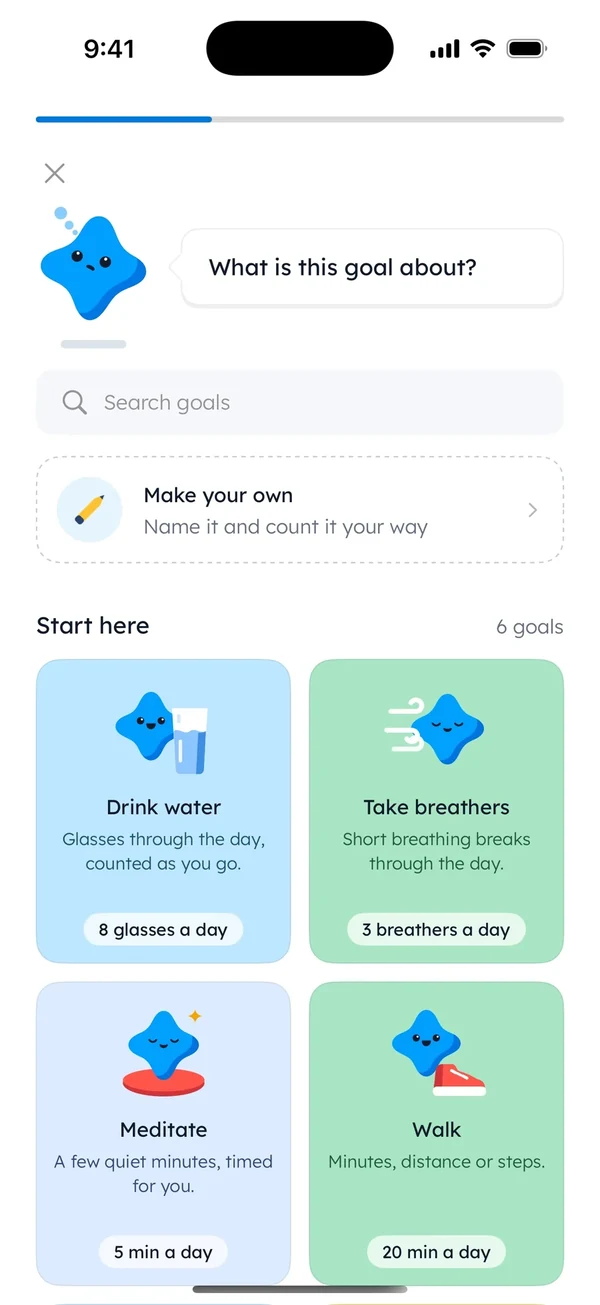
And each goal in the app counts its own way, glass by glass or dollar by dollar.
Work habits
Work habits hide inside the job itself. So they feel less like habits and more like the weather.
Email first
You open the laptop and the inbox opens with it. By the time you look up, other people’s messages have planned your whole morning while your own list waits in your head.
That’s backwards.
The swap: focus for 10 minutes on your own list before the inbox. In the app, that’s the busy-day step for the Study or focus goal.
But ten minutes is the ceiling, not the floor. Then the inbox can have you.
Skipping lunch
Busy days are the minute here. A call runs over, then another one starts, and lunch turns into a coffee late in the afternoon that you drink standing up.
The swap: make a simple snack at home the night before, so lunch is already in the bag. A sandwich is fine.
So is a banana.
How to swap a habit without willpower speeches
Willpower speeches are long, and you usually give them to yourself late at night. Three plain moves do more.
Swap one habit at a time.
Choose the one that bothers you most this week. The other nine can wait their turn.
Make the old habit harder.
Charger across the room, the snack shelf higher up, the shopping app off the Home Screen. Clear calls this “make it difficult”.
Make the new step tiny.
Two minutes, ten minutes, one sweet thing. If it feels almost too small to count, it’s the right size.
| If the habit starts… | Make it harder like this |
|---|---|
| Lights out | Charger across the room |
| After dinner | Phone in a drawer for 10 minutes |
| Around 10 pm | Snacks on a high shelf |
| Payday | Shopping app off the Home Screen |
| Opening the laptop | Your own list before the inbox |
Small steps like these are the whole idea behind micro habits. The cue-and-reward reasoning is in the habit loop, explained slowly.
Why write a line after? In two weeks you won’t remember which nights the swap worked, and the lines will.
Write one line the night you try the swap.
It can be as short as the fourth column of the table. And if you’d like the step and the line in one place,  try it in Yumemira.
When the old habit wins a round
Some nights the swap won’t happen. The video wins, and the next one’s already loading.
The old habit has had years of practice in that exact minute, on that exact couch, and the swap has had a week or two, so it’ll lose a few rounds.
That’s fine.
Tonight, put the phone on a charger across the room before the next video starts.
The next video can wait for the morning.
Questions people ask
What are examples of bad habits?
Everyday examples include snoozing the alarm, doom-scrolling after dinner, using the phone in bed and late-night snacking. Others are leaving the dishes, impulse buys, checking email first thing, skipping lunch on busy days and leaving messages unanswered.
What are small bad habits?
Small bad habits are the ones that take seconds but repeat daily: one more video, a chair that collects clothes, a pan left to soak, a reply left for later. Each is minor on its own, and they add up because they repeat.
How do you make a bad habit difficult?
Add one step between you and the habit. Charge the phone across the room, log out of the shopping app, keep snacks on a high shelf. The extra step gives you a moment to choose something else.
How do you replace a bad habit?
Find the minute the habit usually starts, then put one small step in that same minute, like putting the phone away for 10 minutes or swapping one sweet thing. Keep the new step small for a week before making it bigger.
Sources
TopicStaying consistent

You earned the Small Swap badge
You read all ten. Now move one charger across one room.
0 XP

Yumemira is an iPhone app (iOS 18 or later).
How Yumemira worksYumemira is free to start. iPhone, iOS 18 or later.