
30-day challenges
How to do a 30-day challenge: a printable tracker and 4 simple rules
The short answer
To do a 30-day challenge, pick one thing, make day 1 tiny, and decide what counts on a busy day before it arrives. Tie it to a time you already stop, and keep it that small for a week. Tick one box a day on a 30-box tracker. If you skip a day, do the next one.
In 30 seconds
- One challenge at a time, sized for your worst day.
- Write the busy-day version down before day 1.
- Plan day 12 now, while you’re still keen.
- After a skip, do the next day. Never two in a row.
Day 1 of a 30-day challenge plans itself. The pen’s new and you’d happily do double.
Day 12 gets no plan at all. So plan it tonight, along with three other small decisions.
We make an iPhone app for small steps, so we’re not neutral here. A pen and paper do the whole job.

Reading XP0 XP
How to do a 30-day challenge in 4 rules
Four decisions, made before day 1, carry a challenge through the dull middle. Make them before day 1, and write them down.
| Rule | Why | Example |
|---|---|---|
| Pick one thing | Two challenges split one tired evening | “Read every night. Just that.” |
| Size it for day 1 | A small start survives a bad week | “2 pages, not a chapter.” |
| Plan the busy day | Busy days never send a warning | “Busy day: 1 page, still a tick.” |
| Decide what a skip means | A rule made early ends the argument | “Skip one, never two.” |
Still choosing what to do? The 30-day challenge ideas list has 60 of them, each with a day-1 size. Come back here to run the one you pick.
Pin the four answers to the top of your tracker.
The 4 rules, one at a time
Each rule’s a one-minute decision. The answers go on the tracker itself, where day 12 can read them.
Rule 1: pick one thing
A month has room for one new thing.
Say you start reading, running and a no-spend month on the same Monday. By Thursday, all three are fighting over the same twenty minutes after dinner, and the loudest one wins.
So choose one. The other two can wait their turn: that’s what next month is for.
Rule 2: size it for day 1
The right size is the one you’d still do on a bad day. Here’s a quick way to find it.
Write the big version.
“Read a chapter every night.”
Cut it in half.
“Read half a chapter.”
Cut it again.
“Read 2 pages.”
Picture a bad day.
Late home, laundry on the chair, phone at the edge of its charger cable. Would you still do it?
Keep that size for a week.
Grow it later, never in week 1.
If step 4 gets a “maybe”, cut once more. Two pages can feel silly.
That’s fine. It’s small on purpose.
Rule 3: plan the busy day
Write a busy-day version next to the normal one: 1 page instead of 2, 5 minutes instead of 10. On a busy day, the small version earns the full tick.
Rule 4: decide what a skip means
Here’s the rule we’d pick: a skipped day is one empty box, and the next day’s a normal day. No doubling up tomorrow.
It fits on the tracker in four words: “Skip one, never two.”
Rule 3 is the one our app is built around. In Yumemira, the small-steps journal for iPhone, today’s step sits above a Busy day? choice, so the small version is one tap away.
When you set a goal up, you can also set a 30-day challenge length.
On paper, it’s the same idea: two lines at the top of the sheet, and you choose one each night.
Plan day 12 before you start
Day 12 is the middle of the month: the new-pen feeling is gone, and day 30 is still far off. Plan it on day 1, while you still care about it.
Picture day 12. It’s a Tuesday, the bus was late, and the box you’re about to tick has eleven ticks above it and eighteen blanks below it, which feels like a lot of blanks.
What would help that person? Write it down now. Three short answers are enough:
- What’s the busy-day version? (You wrote this in rule 3.)
- Where will the tracker be? Next to the phone charger is hard to miss.
- What will you write in the box? One word is enough: “done”, “busy” or “skip”.
Write a note to day 12 on the tracker. Something plain, like “Day 12: one page and bed.”
Your printable 30-day challenge tracker
Thirty numbers in five rows. Print this page or copy the numbers onto any scrap of paper: the back of an envelope does the job.
| Days | Tick one box a day | A line it might get |
|---|---|---|
| 1 to 7 | 1, 2, 3, 4, 5, 6, 7 | “Day 1 done. Smaller than expected.” |
| 8 to 14 | 8, 9, 10, 11, 12, 13, 14 | “Day 12. Busy version. Still ticked.” |
| 15 to 21 | 15, 16, 17, 18, 19, 20, 21 | “Halfway. The book finally got good.” |
| 22 to 28 | 22, 23, 24, 25, 26, 27, 28 | “Skipped Tuesday. Back on Wednesday.” |
| 29 to 30 | 29, 30 | “Box 30. Keeping it for next month.” |
Circle a number when the day is done. Write the challenge, the normal size and the busy size across the top.
Matt Cutts, who’s run a long list of 30-day challenges, described a version of this on NPR’s TED Radio Hour (opens in a new tab): a calendar and a marker, one X a day for the challenge.
That was his trick. The empty box does the reminding, which is easier than remembering.
For anything with a number in it, like glasses or pages, the habits to track list gives each habit a unit and a small starting size.
What to do if you skip a day
Do the next day, at the normal size, and leave the gap blank.
A month is long, and one bad day can turn up in any of them. Two empty boxes in a row are harder to come back from, so the rule says “never two”.
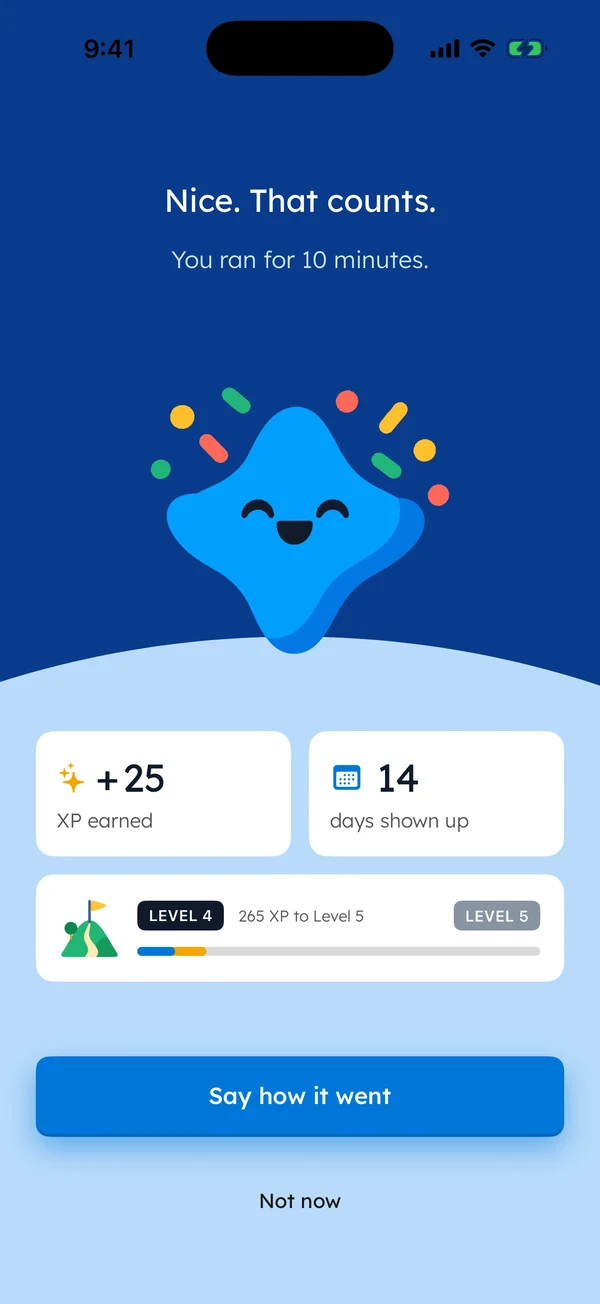
In Yumemira, that number is days shown up, in total. A skipped day doesn’t reset it, so day 13 starts where day 11 left off.
James Clear’s summary (opens in a new tab) of a 2010 habit study is kind here: missing one opportunity “did not materially affect the habit formation process”.
It’s one study, and nothing promises that your month will go the same way. But one empty box is just one empty box.
If you’d like the longer version, the never miss twice rule has it, along with what to do on the second day.
A 30-day journaling version
Pair the challenge with one line a day about how it went. It takes a minute, and day 30 gets a month of short notes instead of thirty ticks.
The line can be plain. Any of these would do:
- “2 pages. Fell asleep on page 2.”
- “Busy day. 1 page, standing at the bus stop.”
- “Skipped yesterday. Back tonight, and it felt easy.”
- “Day 30. Didn’t expect to get here.”
If you’d rather write than tick, make the line the challenge itself. A month of daily journal prompts gives you one question a night, so you never face a blank page.
Do the step first, then write one line about it.
It’s easier to write about something you did ten minutes ago than about a whole day. And on day 31 you’ll have a month to read back.
So, tonight: take that page and write your day-1 size beside box 1. Day 12 already has its note.
Questions people ask
Do 30-day challenges actually work?
They work well as an experiment with an end date. Thirty days is a handy length because it fits a calendar month. Nothing guarantees a habit by day 30, so judge it on day 31: keep it, grow it or stop.
What is a 30-day challenge?
A 30-day challenge is one small thing you do every day for a month, like reading 2 pages or taking a short walk. You tick one box a day, and on day 31 you decide what happens next.
What should I do if I skip a day in a 30-day challenge?
Do the next day at the normal size and leave the empty box empty. Don’t double up to make up for it. The rule that keeps a month going is simple: skip one day, never two in a row.
What happens after a 30-day challenge?
You choose. Keep it at the same size if it fits your day, grow it a little if it feels easy, or stop if it never fit. Then pick the next challenge, or take a month off before you do.
Sources
TopicChallenges

You earned the Box One badge
You read the rules. Now write your day-1 size beside box 1.
0 XP

Yumemira is an iPhone app (iOS 18 or later).
How Yumemira worksYumemira is free to start. iPhone, iOS 18 or later.