
Journal prompts
Journal prompts: 120 prompts sorted by how your day felt
The short answer
Journal prompts are questions that give you something to write when the page is blank. The 120 below are sorted by how your day felt, from great to hard, and each one fits in a line. Pick the group that matches today, answer one at a time you already stop, and keep it that small for a week.
In 30 seconds
- Pick a prompt by how today felt, then answer it in one line.
- Skip any prompt that doesn’t fit. There are 23 more in the group.
- Worried days get practical questions about what you can do next.
- On a hard day, a one-word answer is a real answer.
“Describe your ideal life in detail.” It’s a lovely question. At 10:52 pm, with your phone on the charger cable that only works at one angle, it’s an essay.
The 120 prompts here are smaller. Each one fits in a line.
We make an iPhone journal, so we’re biased. A pen works just as well.

Reading XP0 XP
Pick journal prompts by how your day felt
The groups follow the kind of day you had, so you only need one of them tonight. Each row below has one prompt and a made-up line.
| How today felt | A prompt to try | A line it might get |
|---|---|---|
| Great | “Which minute of today would you replay?” | “Ice cream on the wall outside the bakery.” |
| Okay | “What felt a little easier today?” | “Found a seat on the bus home.” |
| So-so | “What was one up and one down from today?” | “Up: fresh bread. Down: lost my umbrella.” |
| Worried | “What’s one thing you can do about it tomorrow?” | “Email the landlord before work.” |
| Hard | “What’s one word for today?” | “Heavy.” |
None of those lines would win a prize.
But each one is true, and each took about ten seconds. Read back in March, they’ll still mean something.
Match the prompt to the day you actually had.
A great-day question on a hard night feels like a test you didn’t study for. So check how today felt first, then scroll to that group.
If you’ve never kept a journal, the guide on how to start journaling covers the setup first. And if one line still feels long, one sentence a day uses even less ink.
24 prompts for a great day
Good days feel like they’ll stay sharp forever. By next month, the details have blurred into the days around them, and a whole good Saturday shrinks to the words “nice day” in your head.
So catch one detail while it’s still fresh.
The first group looks back at what went right, and the second keeps a little of it for later.
 Catch the good part
- What made today a good one, in five words?
- What happened today that you’d happily do again?
- Who made today better, and what did they do?
- What did you finally get done today?
- What did you eat today that was worth remembering?
- What made you laugh today?
- Which minute of today would you replay?
- What went right that you might not usually notice?
- What did you do today that would surprise you a year ago?
- Which photo from today would you keep?
- Where were you when the day turned good?
- What did you say yes to today?
Keep it for later
- What do you want to remember about today a year from now?
- How would you describe today to a friend in one text?
- What did you do that helped today go well?
- What small part of today could you repeat tomorrow?
- Who would you like to thank for today?
- What did today show you you can do?
- What detail from today would you forget by next week?
- What song fits today?
- What made you proud today, even a little?
- If today had a title, what would it be?
- What surprised you today, in a good way?
- What good thing do you want to plan for this week?
Prompt 18 is worth rereading later, on a day that went the other way.
24 prompts for an okay day
Okay days are the easiest to skip, because nothing on them asks to be written down.
The bus came on time, and the laundry is still on the chair where it was this morning, waiting for a decision nobody wants to make tonight.
But okay days hold the small things that worked, and those are easy to repeat. These journal entry prompts go looking for them.
 Find the good bit
- What was the nicest part of an ordinary day?
- What went to plan today?
- What did you do on autopilot that went fine?
- What did you eat today that you’d eat again?
- Who did you talk to today, and about what?
- What was the weather doing, and did it matter?
- What did you finish today, however small?
- What felt a little easier today?
- What did you see on the way somewhere today?
- What from today would you keep, and what would you skip?
- What did you spend most of today doing?
- What small thing worked today?
Make tomorrow a bit better
- What would turn tomorrow from okay into good?
- What can you get ready tonight for tomorrow?
- What small step could you take tomorrow?
- What did you learn today, even something tiny?
- What do you want more of this week?
- What did you put off today, and when will you do it?
- What are you looking forward to?
- If you could change one thing about today, what would it be?
- What was the most useful thing you did today?
- What question would you like answered this week?
- What did you do today just for you?
- What’s on your list that you actually want to do?
24 prompts for a so-so day
So-so days are the mixed ones. Some of it went fine and some of it went sideways.
By evening, the whole day has the flavor of a cup of tea you made at four o’clock and found, still full and stone cold, on the counter at nine.
The first group names what happened in the middle. The second looks for one thing to change tomorrow.
 Name what was in the middle
- What was one up and one down from today?
- What made today feel flat?
- What went better than you expected?
- What did you keep thinking about today?
- What took up the most time today?
- Which part of today would you skip if you could?
- What was just fine today, and nothing more?
- What did you need today that you didn’t get?
- What went sideways today, in a few words?
- What did you do today that you’d rather not do again?
- What was the most ordinary moment of today?
- What happened today that you almost didn’t notice?
Find one thing to change
- What would have made today a bit better?
- What could you do differently tomorrow, in one small way?
- What are you done with for today?
- What can wait until next week?
- What did you do well, even on a meh day?
- What would you like to try tomorrow?
- What’s the smallest thing that could lift tomorrow?
- Who could you message to make tomorrow brighter?
- What would you like to stop doing this week?
- What job can you drop from tomorrow’s list?
- What’s the next easy step on something that’s stuck?
- What gave you a bit of energy today?
Write the up and the down. The day was both.
On nights when even these feel like too much, what to write in a journal has a shorter answer: one plain fact, like lunch.
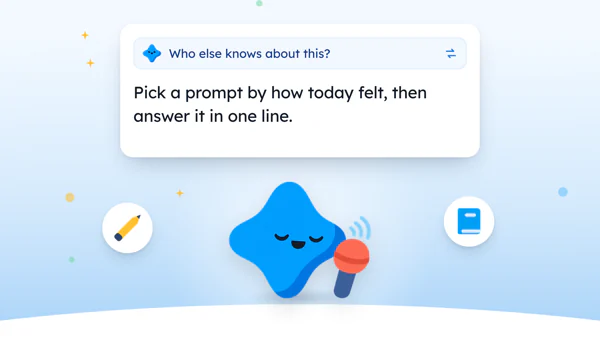
Scrolling through 120 questions every night is a lot, so a phone can hold one for you. In Yumemira, the small-steps journal for iPhone, a new blank entry opens with a question from Mira, the app’s star.
Another question swaps it, and Write without one leaves you a plain line.
On paper, the same trick is a folded list of five prompts in the back cover, one for each kind of day.
24 prompts for a worried day
These prompts are practical. They split a worry into what you know and what you’re only guessing.
They won’t make the worry vanish, and they don’t try to, but they do turn a cloud of what-ifs into a short list you can read in the morning.
So the worry goes down in plain words, with the next step under it. Then the notebook closes.
 Put it on paper
- What’s on your mind, in one sentence?
- What exactly are you worried will happen?
- Is this worry about today, tomorrow or later?
- Which part of this is in your hands?
- Which part isn’t in your hands?
- What do you know for sure about it?
- What are you guessing about it?
- Who else knows about this?
- When did you last handle something like this?
- What would you tell a friend with the same worry?
- If the likely bad thing happens, what would you do first?
- What question would you like answered about it?
One thing you can do
- What’s one thing you can do about it tomorrow?
- What’s the smallest first step, under 5 minutes?
- Who could you ask for help or advice?
- What information would make this clearer?
- What can you get ready tonight so the morning goes easier?
- What would “handled” look like by the end of the week?
- What could you cross off tomorrow?
- What can you set aside until tomorrow?
- What went okay today, even with this on your mind?
- What will you check tomorrow, and when?
- When has something gone better than you feared?
- When this week will you come back to it?
Prompt 24 is the useful one on a busy night. Pick a time to return, and write it down.
And until then, the page can hold the rest.
24 prompts for a hard day
Hard days get the shortest prompts. The first group can be answered in a single word.
 Say it plainly
- What happened today, in plain words?
- What was the hardest moment?
- What’s one word for today?
- What do you wish had gone differently?
- What was harder than it looked from the outside?
- What did you get through today?
- Who was kind to you today, even for a minute?
- What did you do today even though it was hard?
- What do you need most tonight?
- What don’t you have to fix tonight?
- What helped, even a tiny bit?
- What would you say to a friend who had this day?
Make tonight a little easier
- What kind thing can you do for yourself tonight?
- What can you take off tomorrow’s list?
- Who could you text tomorrow?
- What small comfort is within reach right now?
- Have you eaten something warm today?
- What can wait until you’ve had a rest?
- What’s still okay, even today?
- What are you glad is over?
- What will tomorrow’s smallest step be?
- What did you do right today?
- What do you want to remember about getting through this?
- What’s the first thing you’ll do tomorrow morning?
Prompt 17 is meant literally. If the answer is no, the line can wait until you’ve eaten.
Morning vs evening prompts
Morning prompts look ahead, and evening prompts look back. Both kinds are already in the list, so these six pairs come straight from the groups.
| Morning | Evening |
|---|---|
| “What are you looking forward to?” | “What made you laugh today?” |
| “What’s on your mind, in one sentence?” | “What went to plan today?” |
| “What’s the smallest first step, under 5 minutes?” | “What did you get through today?” |
| “What do you want more of this week?” | “Who made today better, and what did they do?” |
| “What question would you like answered this week?” | “What was one up and one down from today?” |
| “What’s on your list that you actually want to do?” | “What felt a little easier today?” |
The morning side fits the first cup of tea, or the ride on the bus before the busy stop where half the passengers get off at once. The evening side suits the minute after you plug in your phone.
You don’t need both. The best one is the time you’d keep, so give it a week before you switch.
How to use journal prompts without overthinking
Prompt journaling works best when the prompt is the smallest part of the job. You read it once, and you answer it in a line.
Pick one.
Choose the group for today and take its first prompt, or the one your eye lands on.
One line.
One sentence, or five words on a busy day. Stop there, even if the page looks empty.
Skip freely.
If a prompt doesn’t fit, move to the next one. You don’t owe any prompt an answer.
Add the feeling.
Great, okay, so-so, worried or hard. That word sorts your lines for later.
If a prompt takes longer than ten seconds, swap it.
Some nights every prompt bounces off, because the day was mostly sitting still.
On those nights, do one small thing first, then write a line about it. Two pages of the book on your nightstand will do, or a glass of water.
It’s hard to have nothing to say about something you did five minutes ago. That’s why our app starts with a step.
After you mark a step done in Yumemira, Mira cheers. Then Say how it went opens one question while the answer is fresh.
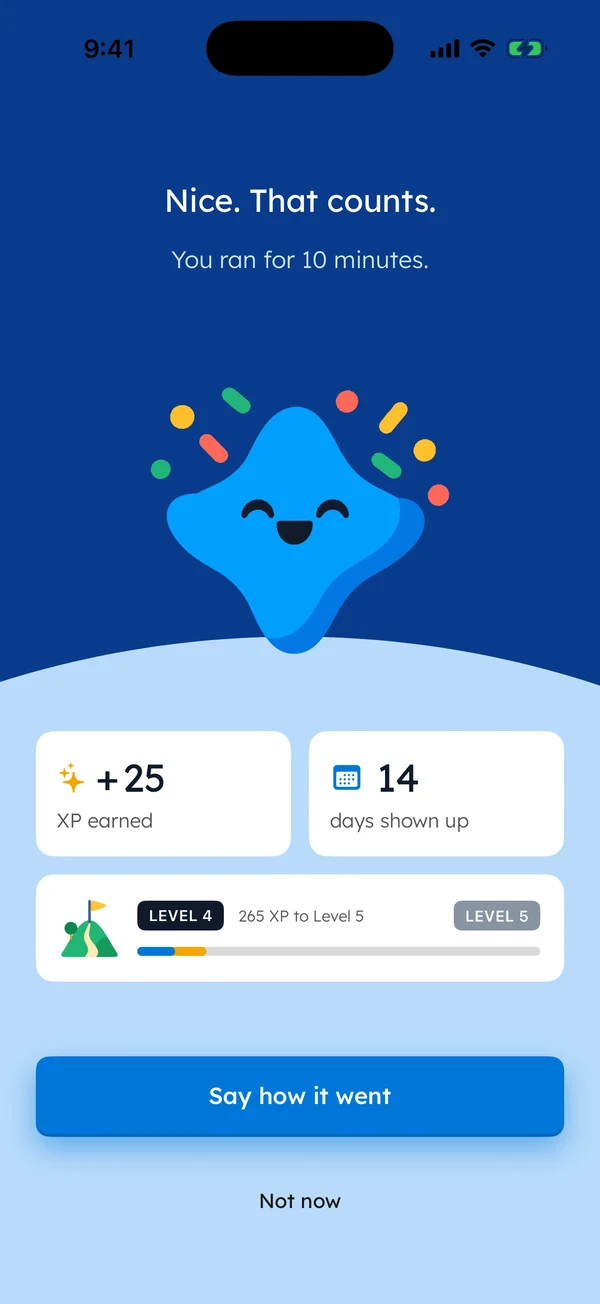
That’s the same idea as a journal that asks you one question a day, with a small thing done first.
On paper, the step and the line go together: “Read 2 pages. The detective is lying.”
If you’re brand new to this, the list of beginner journal prompts starts with smaller questions for your first weeks.
Tonight, pick the face that fits today and answer the first prompt in that group. The ideal life can wait for a slow Sunday.
Questions people ask
What are good journal prompts?
Good prompts are short and specific, and you can answer them tonight. “Which minute of today would you replay?” works better than “Describe your ideal life”, because the answer arrives in seconds. Sorting prompts by how your day felt makes the right one easier to find.
What is a journal prompt?
A journal prompt is a question or sentence starter that gives you something to write about. It takes away the blank page. You answer it, in a line or a page, and that answer is your entry for the day.
How do you use journal prompts?
Pick one prompt that fits how today felt and answer it in one line. Then stop. Skip any prompt that doesn’t land. Answer at a time you already stop each day, like plugging in your phone, and keep it that small for a week.
How many prompts should I answer a day?
One is plenty for most days. A single prompt answered in one line is easy to repeat tomorrow, and repeating it is what keeps a journal going. On a day with more to say, answer a second one.
What should I write on a hard day?
Write one plain word or one plain sentence about the day, like “Heavy” or “Long shift, glad it’s over.” You don’t need to explain it. A prompt like “What did you get through today?” keeps it short.
Are there fun journal prompts for adults?
Yes. Fun prompts for adults are about small, specific things: “What song fits today?” or “If today had a title, what would it be?” They work on good days and slow ones, and they take seconds.
TopicJournal prompts

You earned the Prompt Picker badge
You found your group. Now answer its first prompt in one line.
0 XP

Yumemira is an iPhone app (iOS 18 or later).
More about the daily journalYumemira is free to start. iPhone, iOS 18 or later.