
Keep journaling
How to journal without feeling cringe (even when rereading)
The short answer
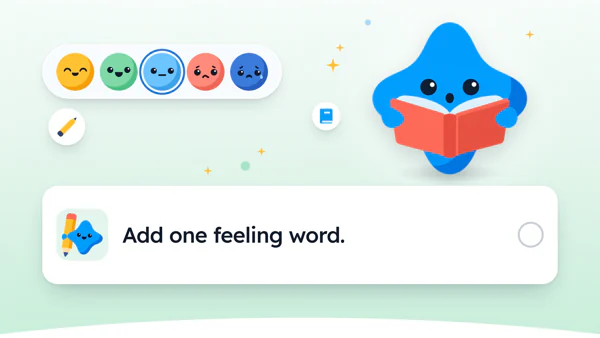
To journal without feeling cringe, write like a text to yourself, not a post. Put today’s facts first in plain words, add one feeling word, then stop, at a time you already stop, like plugging in your phone. Don’t reread anything for the first month. Keep it that small for a week.
In 30 seconds
- The cringe usually comes from writing for an imagined reader.
- Write today’s facts first, then one feeling word, then stop.
- Make other readers impossible: one home for paper, a lock on the phone.
- Reread one month at a time, looking for one line you’d keep.
You opened last year’s journal and read half an entry. Then you shut your eyes. Past you had used the word “universe” three times and signed off with “Onward.”
Nobody else saw it. You still thought about the freezer.
That wince has a fix, whether you’re journaling every day or once a month.

Reading XP0 XP
Why journaling feels cringe
The cringe usually starts with an imagined reader. Somewhere between the pen and the page, an audience sneaks in, often the you who finds this notebook in a box years from now.
So you start to perform. The sentences get bigger, the feelings get explained, and every bad day ends with a lesson. Then the reread comes, and the performance is all that’s left.
Nobody’s grading this page, including future you.
If you post online, the caption voice comes easily. But it was built for strangers, and a journal has no strangers in it.
Five cringe triggers and what to write instead
Each trigger below has a plain swap, and the last column shows the kind of line that rereads well.
| Trigger | Try this instead | Example line |
|---|---|---|
| Writing like a caption | Write like a text to yourself | “Long day. Ate cereal for dinner.” |
| Big words like “universe” | Use the plain word | “Hard week. Still here.” |
| Forced gratitude | One true small thing | “The bus driver waited for me.” |
| Writing for a future reader | Write for tonight’s you | “Note to self: buy bulbs.” |
| Explaining every feeling | Name it in one word | “Annoyed. Mostly at the umbrella.” |
Those lines would get zero likes online, but next March, reading them on a bus with a bag on your knees, you’ll know exactly what each one meant.
Big words are heavy to reread.
“Hard week. Still here.” says what a paragraph about resilience says, and it weighs much less.
The umbrella line is the sneaky favorite here. It has one feeling word, then one small fact that stops the feeling from sounding grand.
How to journal without feeling cringe, for one reader
The fix is an audience of one. That’s you, tonight, already half asleep with the phone charger in reach.
It’s the voice you’d use to text yourself a reminder about the laundry, with no setup at the start and no lesson at the end.
Write the facts first.
What happened, in order, in plain words. “Missed the bus. Walked. Got rained on.”
Add one feeling word.
Take the first one that comes, even if it’s “meh”.
Use “I” and short words.
“I was annoyed” rereads better than a page about frustration.
Stop there.
If the line seems to want a moral, let it go without one.
Write the facts first. Feelings get one word.
Lines about something you did are the hardest to make cringe, because there’s nothing to perform. “Read 10 pages. The book finally got good.” has no audience in it.
We make Yumemira, the small-steps journal for iPhone, so count us as biased. A pen does this just as well.
In the app, you take one small step toward a goal and tap Mark done. The app’s star, Mira, cheers “Nice. That counts.”
Then Say how it went asks “How did it go?” The answer is a line about something you did minutes ago, and it’s hard to show off about ten pages.
On paper, the same rule holds. Write about one thing you did, for a reader who was there.
Make it impossible for anyone else to read
Part of the cringe is plain fear. If someone might read the page, the writing bends toward them, even on nights it doesn’t feel that way.
So take the reader away for real. On paper, that means one home for the notebook, or a bag it travels in, and other people written as initials.
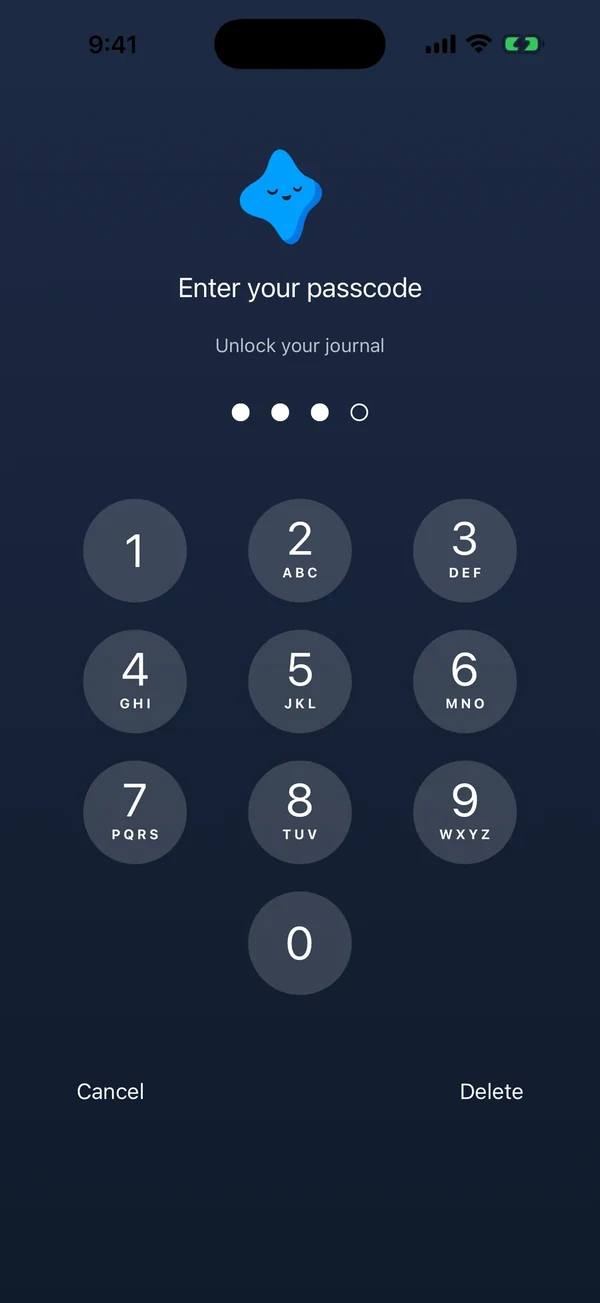
On an iPhone, Apple lets you lock an app (opens in a new tab) so it needs Face ID or a passcode to open. Apple says a locked app’s information stays out of places like notification previews and search.
Yumemira has no account to make, and your one-line journal is stored on your iPhone. App lock is part of Pro: it asks for your passcode or Face ID before the app opens.
The longer version, from paper hiding spots to backups, is in how to keep a journal private.
How to reread old journal entries without wincing
Rereading is where the cringe gets loud. So change how you read.
It helps to read with a pencil, not a red pen. You’re not marking the page. You’re looking for one thing past you got right.
- Pick one month. A year of past you in one sitting is a lot of past you.
- Read it on an ordinary night, when nothing big is riding on it.
- Find one line you’d still write today, and leave the rest alone.
- Write one thing you’d tell past you in tonight’s entry.
Reread one month at a time, pencil in hand.
And the “universe” entry? Someone was trying hard when they wrote it, on a night when trying hard was what they had, and that person is the reason you’re reading this now.
If the urge is to tear out whole pages, letting your journal be messy is the next thing to read.
Tonight, write one line you’d never post
One plain line, for an audience of one, is the whole method. You can do it lying down.
The lesson and the “Onward” can go in someone else’s caption.
Next year, this is the entry you’ll read with your eyes open.
Questions people ask
Why does journaling feel so cringe?
Usually because you’re writing for an imagined reader, like a future biographer or a stranger online. The sentences get bigger and the feelings get explained. Write for yourself tonight instead: today’s facts first, then one feeling word.
Is it normal to be embarrassed by old journal entries?
Yes. Old entries were written by an earlier you, so some lines will sound strange now. Read one month at a time, look for one line you’d still write today, and leave the rest as it is.
Should I write my journal as if someone will read it?
No. Writing for a reader is what makes entries sound performed. Write for yourself, then make another reader unlikely: one home for a paper notebook, or an app lock on your phone.
How do I stop journaling feeling performative?
Mostly by dropping the caption voice. Write what happened in plain words, then add one feeling word. Leave the lesson out. If a line sounds like a post, trim it until it sounds like a text to yourself.
Sources
TopicKeep journaling
You earned the Small Step badge
You read to the end. Tonight, write one line you’d never post.
0 XP

Yumemira is an iPhone app (iOS 18 or later).
More about the daily journalYumemira is free to start. iPhone, iOS 18 or later.